Electro-Optic Modulators: RTP vs. BBO Architectures
High-repetition-rate Q-switching, pulse picking, and cavity dumping require electro-optic modulators that resist piezoelectric ringing and thermal depolarization under high-average-power pumping. This application note sets out the selection criteria for Pockels cells across Raicol’s electro-optic portfolio — specifically focusing on Rubidium Titanyl Phosphate (RTP) and Beta-Barium Borate (BBO) – to support megahertz-regime operation and ultraviolet (UV) laser cavities. All specifications quoted are Raicol catalogue values.
1. The Acoustic Ringing Barrier in MHz Cavities
In megahertz-regime laser cavities, the primary design barrier for electro optic modulation is acoustic (piezoelectric) ringing. When conventional materials (e.g., KD*P or LiNbO₃) are driven by high-repetition-rate electrical pulses, mechanical resonances are excited within the bulk crystal lattice, severely degrading the optical contrast ratio and destabilizing the Q-switch pulse train.
To achieve stable, ringing-free amplitude modulation above 100 kHz, optical architects must transition to crystalline structures possessing minimal piezoelectric coupling coefficients and high acoustic velocities, specifically RTP, which offers ringing-free operation at repetition rates above 1 MHz across its 500–3000 nm operational range. For UV/DUV cavities, BBO provides deep-UV transmission and a very high damage threshold, with ringing-free operation up to ~25 kHz per Raicol’s EO comparison data.
2. RTP & BBO Electro-Optic Specification Comparison
Technical Reference Table: The following empirical specifications are provided for systems architects specifying electro-optic modulators. All values below are Raicol catalogue specifications.
RTP Pockels Cell Specifications
Parameter / Metric | Raicol RTP Pockels Cell |
Transparency Range | 500 – 3000 nm |
Acoustic / Piezoelectric Ringing | None up to the MHz regime (>1 MHz repetition rates) |
Half-Wave Voltage (Vπ) | 3.6 kV (@ 1064 nm, for EO cell size 9 × 9 × 10 mm²) |
LIDT (1064 nm, 10 ns, 10 Hz) | > 1 GW/cm², typical > 2 GW/cm² |
Hygroscopic | No (No sealed housing required) |
Extinction Ratio (Contrast) | > 35 dB (at 1064 nm) |
Primary Applications | High-rep-rate Q-switching, aerospace LIDAR, pulse picking |
BBO Pockels Cell Specifications
Parameter / Metric | Raicol BBO Pockels Cell |
Transparency Range | Deep-UV transparent; phase matching from 190 to 1780 nm (SHG, SFG, OPO) |
Acoustic / Piezoelectric Ringing | Low; ringing-free up to ~25 kHz (Raicol EO comparison data) |
LIDT (1064 nm, 10 ns, 10 Hz) | 5 GW/cm² @ 1064 nm; 1 GW/cm² @ 532 nm (10 ns pulses) |
Hygroscopic | Yes (Requires sealed housing) |
Extinction Ratio (Contrast) | > 30 dB (≥ 1000:1) |
Primary Applications | UV Q-switching, high-average-power cavities, regenerative amplifiers |
*Selection summary: Choose RTP for megahertz-regime repetition rates, low operational voltage, and ruggedized non-hygroscopic packaging; choose BBO for high-power UV/DUV applications and peak damage threshold requirements.
3. Advanced Electro-Optic Manufacturing & Assembly
The operational limits of a Pockels cell are defined not just by the raw crystal, but by the mechanical and geometric assembly. Raicol manufactures advanced configurations to support strict electro-optic tolerances:
- Dual-Crystal RTP Thermal Compensation: Because RTP exhibits natural birefringence, its phase retardation is highly sensitive to ambient temperature fluctuations. Raicol manufactures a monolithic-style dual-crystal configuration, precisely matching two RTP elements and mounting them in series with orthogonal crystallographic orientations. This optical architecture internally cancels the natural birefringence and thermal drift, creating a highly temperature-stable modulator while significantly reducing the required driving voltage (Vπ).
- Thermally Managed BBO Housings: To support kW-class average power systems without inducing thermal depolarization, Raicol supplies BBO cells integrated into specialized conductive or active water-cooled housings. This structural management dissipates localized heat accumulation away from the optical aperture.
- Ruggedized & Dry Packaging: Taking advantage of RTP’s non-hygroscopic lattice, Raicol manufactures dry-packaged Pockels cells without index-matching fluids or hermetically sealed windows. This reduces internal insertion losses and supports packaging requirements for demanding aerospace and defense environments.
4. Design Considerations in Electro-Optic Cavities
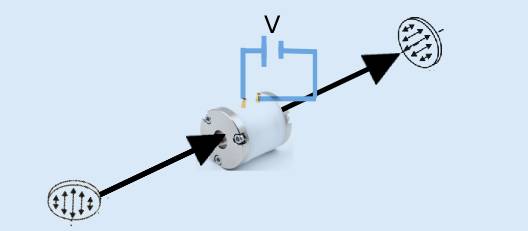
Aperture vs. Voltage Trade-offs: In transverse Pockels cells, the half-wave voltage (Vπ) scales directly with the ratio of the crystal aperture (distance between electrodes) to its optical length. Architects must carefully balance the required beam diameter against the voltage limits of their available fast-switching electronics.
Thermal Lensing and Depolarization: At high average powers, residual bulk absorption causes a radial thermal gradient. This induces thermal lensing and spatially varying birefringence, which degrades the extinction ratio. Careful consideration of the crystal’s thermal conductivity and active housing cooling is required for continuous operation.
Treat the Coating as a First-Class Failure Mode: In nanosecond Q-switched regimes, the optical coating commonly fails before the bulk crystal. Raicol supplies highly controlled Ion Assisted Deposition (IAD) AR coatings, which must be specified exactly against the operational wavelength and peak power density of the specific cavity.
5. Engineering Consultation
Raicol’s application engineering team supports optical architects and R&D groups with custom aperture sizing, dual-crystal thermal compensation design, Vπ scaling, and specialized AR coating specification for Q-switching, pulse picking, and cavity dumping systems. Custom electrode configurations and ruggedized housings are available on request.
Raicol Ltd. · 22 HaMelacha St., Rosh HaAyin, Israel · info@raicol.com · www.raicol.com
Further Reading
Specifications quoted throughout are taken from the Raicol product catalogue. Values are typical; guaranteed specifications for a given part number are confirmed at order.
Have you already subscribed to our YouTube channel? Don’t miss out—subscribe now for exclusive content and updates from our company.